We Added Two More Weeks. Here’s Why That Matters.
Apr 20, 2026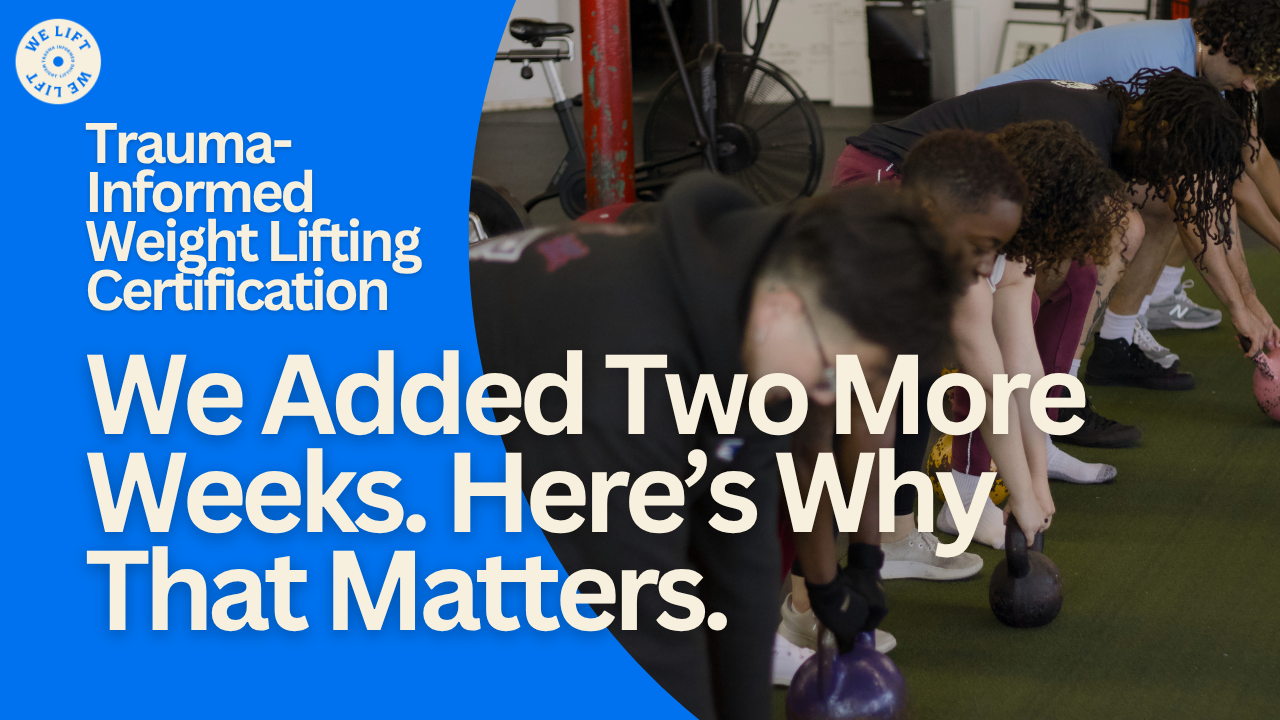
If you've been paying attention to the TIWL Certificate Program lately, you might have noticed something a little different about this cohort.. WE'VE ADDED TWO MORE WEEKS.
Not more content. Not more sessions to keep up with... Just space.
Two weeks of intentional, supported space - shaped directly by what participants told us they needed most.
As we near the end of this Spring cohort, we’ve been listening closely to what felt supportive, what felt challenging, and what people wished they had more of. This shift didn’t come from a strategy meeting; It came from those conversations.
And what we heard was pretty clear.
People didn’t need more information. They needed more room to actually work with it.
You needed more space to actually integrate the work.
If you’ve ever felt like programs move too fast to fully absorb what you’re learning, you’re not alone.
The program is intentionally immersive. Eight weeks of live sessions, self-paced learning, reflection, peer groups, and a final project - all layered on top of real life, work, family, and responsibilities. It’s a lot to hold at once.
And while the content resonated, the pace didn’t always leave space for it to fully land.
“It’s one thing to just receive the information. It’s another thing to let it percolate in their systems a little bit.” - Candace
That word, "integrate", kept coming up.
Because this work isn’t just about understanding concepts. It’s about embodiment, it’s relational, it asks something different from you than just learning and moving on.
So instead of adding more, we created space for what’s already there to settle.
You needed a better way to finish - not just a hard stop.
Before these two weeks were added, the certificate ended on week eight. The final live session was the last time participants gathered together, and then it was over.
For a program built around community, nervous system safety, and relational trust, that kind of abrupt ending wasn’t serving anyone.
“I think folks would go into a little bit of a panic. Maybe even some grief.” - Candace
Instead of a hard stop, we created what she calls an “open closing.”
“Because they have this open space now, they may feel like - okay, I can engage with more of my community members. I can reach out if I need to. I have time to get caught up on the material without feeling like we hit this absolute hard deadline.” - Candace
These additional two weeks offer a more spacious, supported landing. Time to complete your final project, revisit material, stay connected, and access support when you need it.
Because how you end matters just as much as how you begin.
You wanted support that actually feels supportive.
The one-on-one consultations, while helpful for some, didn’t work for everyone.
For some, they felt unnecessary. For others, they were just hard to fit into an already full schedule. What was meant to be supportive sometimes ended up feeling like another thing to manage.
So we let that go.
Now, instead of required sessions, we offer open office hours. A space you can drop into when you actually need support, stay as long as it’s useful, and leave when you’re ready.
“Instead of having five sets of consultations a week, we could just have two sets of office hours and folks drop in and leave as they feel.” - Candace
It’s simpler. More flexible. More aligned with how people actually move through the program.
You wanted to see how this work actually shows up in real life.
One of the most consistent things we heard was this:
"How does this actually look in practice?"
Not just theory, but application.
What it looks like in a session. How it translates into different environments. What it feels like when it’s messy, imperfect, and real.
“Folks just really crave more real-life applications.” - Candace
So we improved that in too.
During these final two weeks, we host a practice lab where certified practitioners share real experiences. Real clients, real challenges, real outcomes. It creates a bridge between learning and doing, while you’re still inside a supported space.
Because understanding something is one thing. Seeing it in action is something else entirely.
→ See how graduates are applying this work in real settings
What this means for you.
If you’re considering the TIWL Certificate, this is what you’re stepping into.
1. A program that listens. That adapts. That evolves based on real feedback, not assumptions.
2. A space designed not just to teach you something, but to support how you actually take it in, work with it, and apply it.
These two extra weeks aren’t an add-on. They’re a reflection of what this work really asks for. Time. Space. Support.
And a way to begin and end that actually feels aligned with everything in between.
The Fall 2026 TIWL Certificate cohort is now accepting applications.