What Is the Trauma-Informed Fitness Certification? A Guide for Fitness, Clinical, and Helping Professionals
Feb 23, 2026
In recent years, trauma-informed practice has stepped out of the therapy room and onto the training floor. What used to live primarily in clinical spaces is now shaping how we coach, cue, and create experiences inside gyms and studios. You might have heard about trauma-informed fitness certifications. These programs equip coaches and clinicians with practical tools to work with greater awareness, respect, and responsiveness when supporting clients who carry lived experiences of trauma. So how do the two come hand in hand? This is not about walking on eggshells. It‘s about raising the standard of care for those whove suffered from trauma.
At Trauma-Informed Weight Lifting (TIWL), we use the term trauma-informed weight lifting to describe our movement-based approach to trauma-informed care. This approach adapts the principles of trauma-informed care to the weight room, helping people reconnect with their bodies through strength and movement in a safe, supportive environment. In this guide, we’ll explain what a trauma-informed weight lifting certification entails, why it matters, and how it can enhance the work of personal trainers, fitness coaches, mental health clinicians, and other helping professionals. Along the way, we’ll clarify how TIWL’s certification stands apart from general “trauma-informed fitness” trainings, so you can understand its unique value for your practice.
What Does “Trauma-Informed Weight Lifting” Mean?
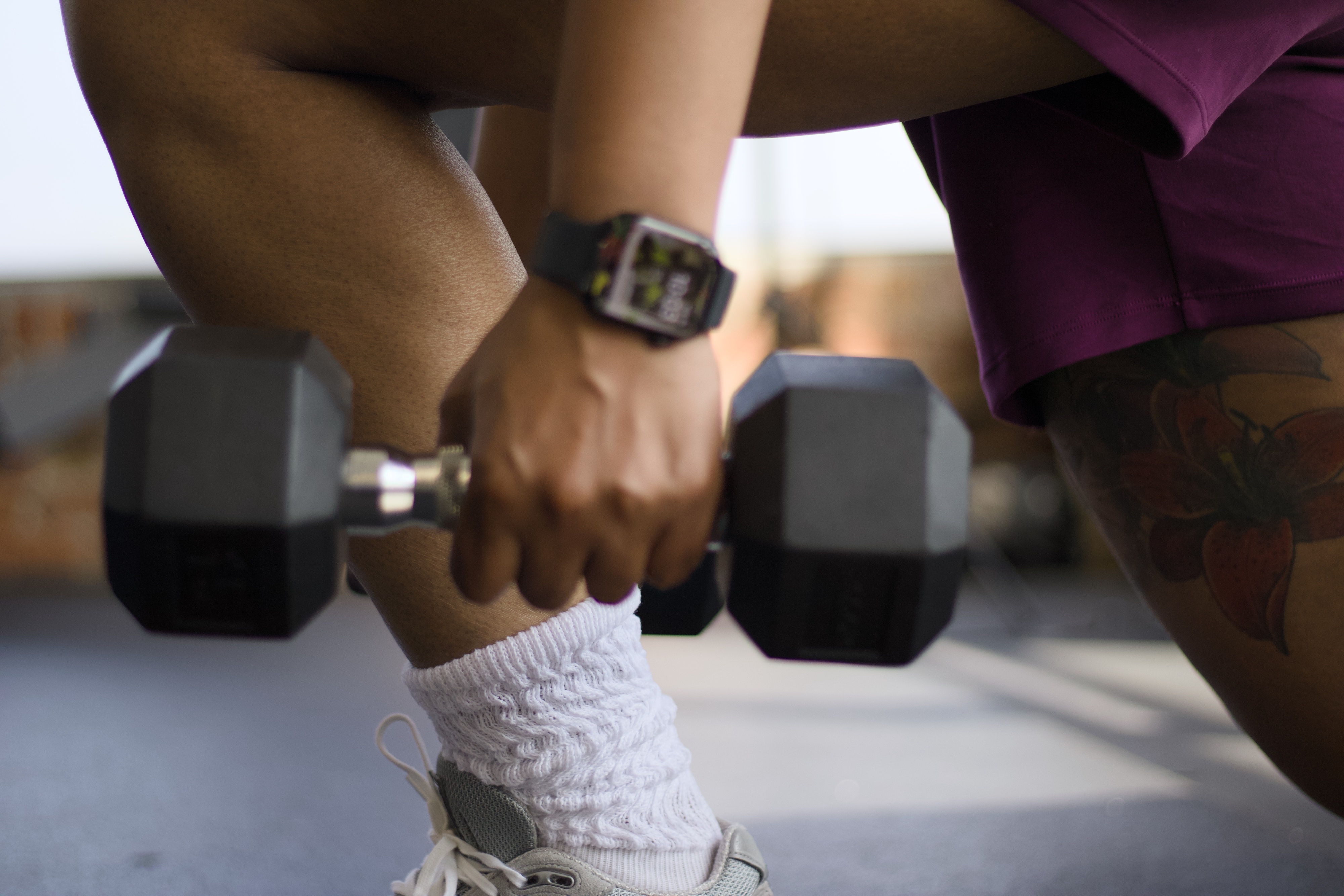
At its core, trauma-informed weight lifting is about applying trauma-informed care principles to exercise and movement, particularly strength training. In practical terms, this means creating workout environments and coaching relationships that prioritize psychological safety, trust, choice, and empowerment. A trauma-informed coach or trainer recognizes that trauma can deeply affect a person’s body and nervous system – sometimes in ways that make typical gym settings or traditional training approaches feel overwhelming. By being sensitive to these effects, the coach can modify how they train clients so that all individuals feel safe and supported as they move.
Trauma-informed weight lifting involves more than just knowing what exercises to do or how to correct form; it’s about understanding how trauma might show up during exercise.
Let’s take “crowded gyms” as an example. For someone who has lived through trauma, a slammed weight, a shout across the room, or even the energy of a packed space can trigger a stress response. They might feel a spike of anxiety, become jumpy, or mentally check out during certain movements.
A trauma-informed approach helps professionals anticipate these reactions and plan for them. That might mean moving to a quieter corner of the gym, letting a client set the pace, or paying attention to body language that says, “I’m not comfortable.”
At its core, trauma-informed coaching helps people reconnect with their bodies through movement in ways that feel safe, doable, and empowering. When the nervous system feels safer, people can actually stay present in their workout. And this is not only for people with obvious or known trauma histories. Research suggests that around 70% of adults have experienced some type of traumatic event. Using a trauma-informed lens creates an environment that feels welcoming and respectful of everyone’s boundaries and needs.
Why Pursue a Trauma-Informed Weight Lifting Certification?
For Fitness or Health Professionals
If you’re a fitness or health professional, you might wonder why obtaining a certification for trauma-informed weight lifting (sometimes informally called a trauma-informed fitness certification) is valuable. The short answer is that it equips you with knowledge and skills to do less harm and more good in your clients’ lives. Many well-intentioned trainers or instructors have unknowingly re-traumatized clients – perhaps by touching a client without consent to “fix” their form, pushing them past a point of panic, or using insensitive language about bodies. A trauma-informed certification helps you avoid these pitfalls by teaching you how to recognize trauma responses and respond with care. By learning to create a safer training environment, you increase client trust and comfort, which in turn can lead to better outcomes and loyalty. Clients who feel safe are more likely to stick with their programs and see progress, both physically and emotionally.
For Mental Health Clinicians and Professionals
For mental health clinicians and healthcare providers, a trauma-informed movement certification like TIWL offers a chance to bridge the gap between traditional talk therapy or medical treatment and the healing potential of physical movement. Research has increasingly highlighted the mind-body connection in trauma recovery. Exercise – and weight lifting in particular – can play a significant role in reducing trauma-related symptoms and improving mental health.
Research continues to show how powerful strength training can be for people living with PTSD. In one pilot study, just three weeks of consistent, high-intensity resistance training was linked to meaningful reductions in posttraumatic stress and anxiety symptoms, plus better sleep.
Beyond the data, many trauma survivors say weight lifting helps them rebuild a sense of control, stability, and empowerment. One therapist described heavy lifting as feeling emotionally grounded and physically strong, offering a real outlet for healing.
By becoming certified in trauma-informed weight lifting, clinicians can bring these movement-based strategies into their work or collaborate more effectively with fitness professionals. The result is more support for the nervous system, more client safety, and better overall well-being.
Looking at the bigger picture, earning a trauma-informed weight lifting certification is also about professional growth. As both the fitness and healthcare industries evolve, trauma-informed practice is being recognized as a core competency, not just a niche add-on.
Certification signals to clients and employers that you are committed to safe, inclusive, and compassionate coaching. You are better prepared to support people who have often felt excluded from traditional fitness spaces, including survivors of abuse, veterans living with PTSD, and individuals from marginalized communities who have experienced discrimination.
Most trauma-informed training also emphasizes cultural humility and anti-oppression principles. We know trauma disproportionately affects people who face marginalization, and truly safe movement environments need to actively work against those harms.
Learning to lift in a trauma-informed way means becoming part of a shift in fitness culture toward spaces that are more healing, more inclusive, and more empowering for everyone.
Who Is This Certification For?
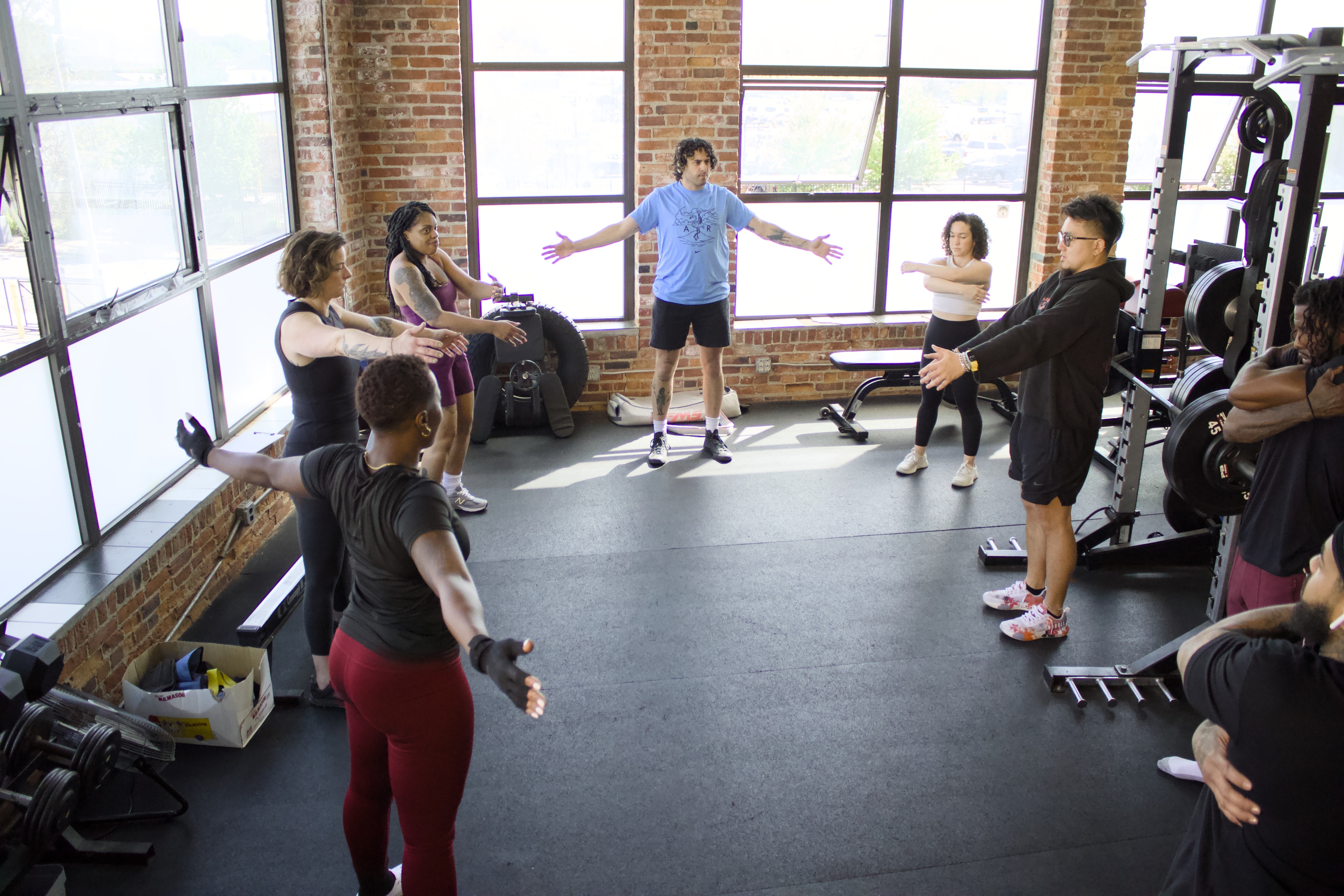
One of the strengths of a trauma-informed weight lifting certification is its interdisciplinary appeal. This training is designed for professionals across diverse fields who share a common interest in healing through movement. You do not have to be a therapist to benefit, nor do you have to be a personal trainer – the certification brings together people from both sides of the equation (and many in between). For example, those who pursue trauma-informed weight lifting certification include:
- Fitness and Strength Professionals: Personal trainers, strength and conditioning coaches, group fitness instructors, powerlifting and Olympic lifting coaches, CrossFit coaches, yoga/Pilates instructors, and other movement practitioners who want to make their sessions safer and more supportive for all clients.
- Mental Health Clinicians: Psychologists, clinical social workers, counselors, marriage and family therapists, trauma therapists, and other licensed (or pre-licensed) mental health providers who wish to incorporate somatic and movement-based techniques into therapy or better understand what happens in the gym space for their clients.
- Healthcare and Wellness Providers: Physical therapists, occupational therapists, physiotherapists, nurses, physician assistants, doctors, and other healthcare workers interested in the role of exercise in trauma recovery and in fostering trauma-sensitive care in rehabilitation or wellness programs.
- Community and Helping Professionals: This can include peer support specialists, youth development workers, bodyworkers and massage therapists, social service and nonprofit staff, educators, and anyone in a helping role who sees the value of physical movement (especially weight training) as a tool for empowerment and recovery. TIWL often says this training is “for humans who care about healing through movement”, which captures it well – it’s the why that unites this community more than the specific job title.
What’s powerful about having such a mix of professionals in one certification program is the cross-pollination of knowledge. Fitness coaches learn from mental health experts about trauma theory and psychological safety; clinicians learn from trainers about exercise science and gym culture. This interdisciplinary learning means each professional gains a more well-rounded perspective. The TIWL certification, in particular, is structured to leverage this diversity – participants go through some training modules together and then also break out into tailored tracks to deepen the material in their own domain. The result is not only that you gain skills relevant to your field, but you also learn to “speak each other’s language” to collaborate better. For instance, a therapist will come away understanding what it’s like for a client to step into a weight room, and a personal trainer will better grasp the neurobiological underpinnings of trauma that a client might be carrying under their workout gear. This shared understanding ultimately leads to more cohesive support for trauma-impacted individuals, whether they’re in a counseling session or a squat rack.
What Do You Learn in a Trauma-Informed Weight Lifting Certification?
A quality trauma-informed weight lifting certification (such as TIWL’s program) covers a wide range of knowledge and practical skills. It’s not just theoretical – the goal is to prepare you to apply trauma-informed principles in real-life fitness or clinical settings as soon as you complete the training. Key topics and competencies typically include:
- Foundations of Trauma and Healing: You’ll start by understanding what trauma is – including the neuroscience of how traumatic stress affects the brain and body – and the core principles of trauma-informed care. This often involves learning about the body’s stress responses, the nervous system (fight/flight/freeze responses), and common trauma symptoms that might show up during exercise (e.g. hypervigilance, dissociation, anxiety). You’ll also discuss the broader context of trauma (such as systemic and intergenerational trauma) to appreciate how factors like racism or oppression can compound an individual’s experience.
- Recognizing Trauma in Fitness Settings: The training will help you recognize how trauma can manifest in movement or gym environments. This might include identifying signs that a client is triggered or overwhelmed – for example, a sudden shutdown during a workout, a panicked expression, or avoidance of certain positions or equipment. You’ll learn to interpret both verbal and non-verbal cues with a trauma-informed lens, so you can respond appropriately.
- Safety and Trust in the Weight Room: A fundamental part of the certification is learning how to create safer, inclusive, and empowering workout spaces. Practically, this covers strategies like: using a welcoming and non-judgmental coaching style, giving the client choices (for instance, alternative exercises if something feels uncomfortable), obtaining consent before physical spotting or adjustments, and establishing predictable routines or cues to avoid startling someone. You’ll also explore how to set up the physical environment to reduce potential triggers – e.g. controlling lighting or sound when possible, or simply being mindful of a client’s personal space. The mantra here is often “safety first”: when a client feels safe, they can truly focus on lifting and healing.
- Trauma-Sensitive Coaching Techniques: Beyond general principles, you’ll practice specific coaching skills that align with trauma-informed care. This includes using trauma-sensitive language – for example, emphasizing internal goals over external appearance, and avoiding cues that could be shame-inducing or authoritarian. It also involves therapeutic dosing and pacing, meaning you learn how to introduce challenges gradually and help clients stay within a tolerable range of effort (sometimes called the “window of tolerance”) rather than pushing to extremes. Additionally, you’ll learn grounding and co-regulation techniques to help clients who become anxious or disconnected during a session. This might be as simple as guiding someone to pause and take a breath, or using a grounding exercise like feeling their feet on the floor between sets.
- Strength Training as a Healing Tool: A unique focus of trauma-informed weight lifting (as opposed to other forms of exercise) is leveraging the particular benefits of resistance training for trauma recovery. Weight lifting can help rebuild a sense of strength and agency in one’s body. During the certification, you’ll explore how to use strength exercises to support nervous system regulation and resilience. For instance, slow, controlled lifts might help someone reconnect with bodily sensations, while the achievement of gradually increasing weight can boost confidence and self-efficacy. You’ll also discuss how to frame progress in empowering ways – focusing on what a body can do rather than how it looks.
- Cultural Competence and Inclusive Practices: Given that trauma and healing don’t happen in a vacuum, the certification will cover ways to ensure your approach is culturally sensitive and inclusive. This means acknowledging and respecting differences in background, identity, and ability. Trauma-Informed Weight Lifting places a strong emphasis on anti-oppressive practice. In training, you might examine how mainstream fitness culture has often been exclusionary or even harmful (e.g. “no pain, no gain” mentality, body-shaming, diet culture), and how to actively counter those narratives. You’ll learn to invite and honor each client’s unique story, to use inclusive language, and to adapt exercises for varying abilities without judgment. The ultimate goal is to ensure everybody – regardless of size, gender, race, or ability – can feel they belong and can benefit from strength training in your space.
- Collaboration and Scope of Practice: Finally, a trauma-informed fitness certification will clarify how to work within your role while collaborating across disciplines. You’ll discuss when and how to refer out to mental health professionals if you’re a trainer, or vice versa, how a therapist might safely incorporate movement in therapy or partner with fitness coaches. TIWL’s program, for example, specifically fosters a shared trauma-informed language between coaches and clinicians, so that collaboration becomes smoother. Understanding your scope of practice – what you can and shouldn’t do – is critical. You’re not becoming a therapist as a trainer, but you are learning to be a more attuned coach who can partner with therapists. Conversely, clinicians learn how far to go in using exercise in therapy and when to involve certified fitness practitioners. This ensures that clients have a whole team looking out for their well-being, each contributing their expertise in a trauma-informed way.
Throughout the certification, the learning is often experiential and reflective. You won’t just sit through lectures on theory; you’ll engage in discussions, practice scenarios, maybe even do some movement exercises yourself to build your self-awareness as a practitioner. By the end, you should have a toolkit of trauma-informed strategies and a solid understanding of how to integrate them into your day-to-day work. As TIWL puts it, the training helps you “understand how trauma shows up in movement spaces, apply strength work to support regulation, build agency-forward environments, and practice trauma-sensitive cueing and co-regulation”. The result is that you’re not only adding letters to your resume, but genuinely transforming how you approach your profession – in a way that can profoundly impact those you serve.

How TIWL’s Certification Stands Out (Trauma-Informed Fitness vs. Trauma-Informed Weight Lifting)
By now, you might be thinking: there seems to be a few different trauma-informed fitness certifications out there – what makes TIWL’s trauma-informed weight lifting certification unique? It’s an important question, especially if you’re trying to choose the right training for your needs. While many programs share common goals, TIWL (Trauma-Informed Weight Lifting) has developed a distinctive approach that reflects our organization’s values, depth of curriculum, and community-based ethos. Here are some key distinctions:
- Focus on Weight Lifting and Strength: Unlike generic trauma-informed fitness courses that may cover broad exercise modalities, TIWL zeroes in on weight lifting and resistance training as powerful tools for trauma healing. This doesn’t mean we ignore other forms of movement, but our curriculum is built around the idea that lifting weights – from barbells to kettlebells – offers unique opportunities for empowerment, grounding, and nervous system regulation. As one expert noted, trauma-informed movement used to be mostly associated with yoga, but “movement-based trauma-healing did not have to be relegated to the yoga mat”. TIWL embraces that philosophy, bringing trauma-informed care into the weight room in a way that had not been widely available before. If you’re particularly interested in strength training and mental health, TIWL’s program is tailored to that intersection.
- Interdisciplinary Training with Tailored Tracks: TIWL’s certification program is carefully structured to serve both mental health professionals and fitness professionals – in the same course. We blend shared learning with specialized modules: for part of the 10-week program everyone trains together, and for other parts there are two dedicated tracks (a Mental Health track and a Movement & Strength track) so you can dive deeper into material most relevant to your background. This design is fairly unique. Other trauma-informed fitness certifications often target either fitness pros or clinicians, but not necessarily both in one program. The TIWL approach means you don’t have to choose one perspective; you get a well-rounded education and also the benefit of understanding the approach from another field’s viewpoint. It’s a bit like getting two trainings in one, culminating in a comprehensive skill set that lets you collaborate across disciplines confidently.
- Depth and Rigor of Curriculum: TIWL’s certificate is not a quick weekend workshop – it’s a multi-week (currently 10-week) intensive training totaling around 60 hours of content. We dive deep into both the science and the practical application, with readings, live sessions, and interactive components. In fact, the TIWL program has been developed in partnership with researchers and is informed by ongoing studies on trauma and weight lifting. (For example, TIWL co-founders have engaged in academic research, such as a grounded theory study on weightlifting as an adjunct intervention for trauma in collaboration with university partners.) The curriculum is continually updated with insights from the latest trauma research, exercise science, and real-world experience of our trainers and participants. Additionally, TIWL’s certification has been recognized by major industry organizations – for instance, graduates earn continuing education credits (CEUs) for NASM (1.9 CEUs) and ACE (6.0 CEUs), underscoring that the program meets high professional standards. Many shorter or newer courses might not offer such accreditation.
- Emphasis on Anti-Oppression and Inclusion: A hallmark of TIWL’s philosophy is the integration of anti-oppression frameworks into trauma-informed practice. We explicitly address how factors like race, gender identity, socioeconomic status, and ability intersect with trauma and with experiences in fitness spaces. This means our certification is not just trauma-aware, but also tuned into the ways mainstream fitness culture can inadvertently harm or exclude people. We train practitioners to actively “do less harm, then do good,” as our guiding principle says. In practical terms, you’ll find TIWL spends time on topics like weight-neutral coaching (steering away from diet culture and body shaming), creating LGBTQ+ affirming spaces, and understanding the impact of biases. This social-justice-informed lens is something that sets TIWL apart; it resonates with professionals who are not only trauma-informed but also passionate about equity and social change.
- Community and Ongoing Support: When you become TIWL-certified, you’re not just taking a course – you’re joining a community. TIWL is a non-profit organization driven by a mission to build a network of practitioners dedicated to healing through strength. Graduates gain access to a Certified Practitioner Portal with an on-demand library of resources, research, and tools to continue learning. Moreover, TIWL hosts The Weight Room, which is our ongoing community forum for certified members. Within The Weight Room, there are regular meet-ups and Practice Labs – peer-led sessions where practitioners come together (often virtually) to discuss challenges, share insights, and practice trauma-informed coaching techniques in a supportive environment. This means your learning and development don’t stop when the course ends; you have a built-in support system and opportunities for continuing education. Many generic trainings might leave you on your own after certification, but TIWL is committed to fostering a “collective and communal” approach to growth (as one of our favorite quotes says: “Sometimes trauma is a collective experience, in which case our approaches for mending must be collective and communal as well.”). We truly believe in lifting each other up – figuratively and literally – as we all work to make our practices more trauma-informed.
- Mission-Driven and Non-Profit Ethos: Finally, it’s worth noting that TIWL’s certification is rooted in a broader mission of expanding access to healing. The program was born out of seeing firsthand the gap in care – clients who felt unsafe or misunderstood in gyms, and the lack of resources for fitness professionals to change that. TIWL operates as a 501(c)(3) non-profit, and part of our goal is to reach communities that might not otherwise afford or hear about this training. We offer scholarships and have initiatives to engage professionals serving marginalized groups, because we recognize the ripple effect: training one practitioner in trauma-informed weight lifting can impact dozens of lives in their community. When you train with TIWL, you become part of this larger movement to democratize trauma-informed wellness. That sense of purpose and community-minded spirit is something our graduates often mention as a highlight of the program – it’s not just about earning a certification, but about contributing to something meaningful that extends far beyond oneself.
In summary, while any quality trauma-informed fitness certification will teach you valuable basics about trauma and exercise, TIWL’s Trauma-Informed Weight Lifting Certification offers a uniquely comprehensive, weightlifting-focused, and community-supported experience. It’s where cutting-edge trauma science meets the grit of the weight room, all wrapped in a warm, inclusive community of practice. We like to say that TIWL is more than just another continuing education unit – it’s a movement in every sense of the word.
Applying Trauma-Informed Weight Lifting in Practice
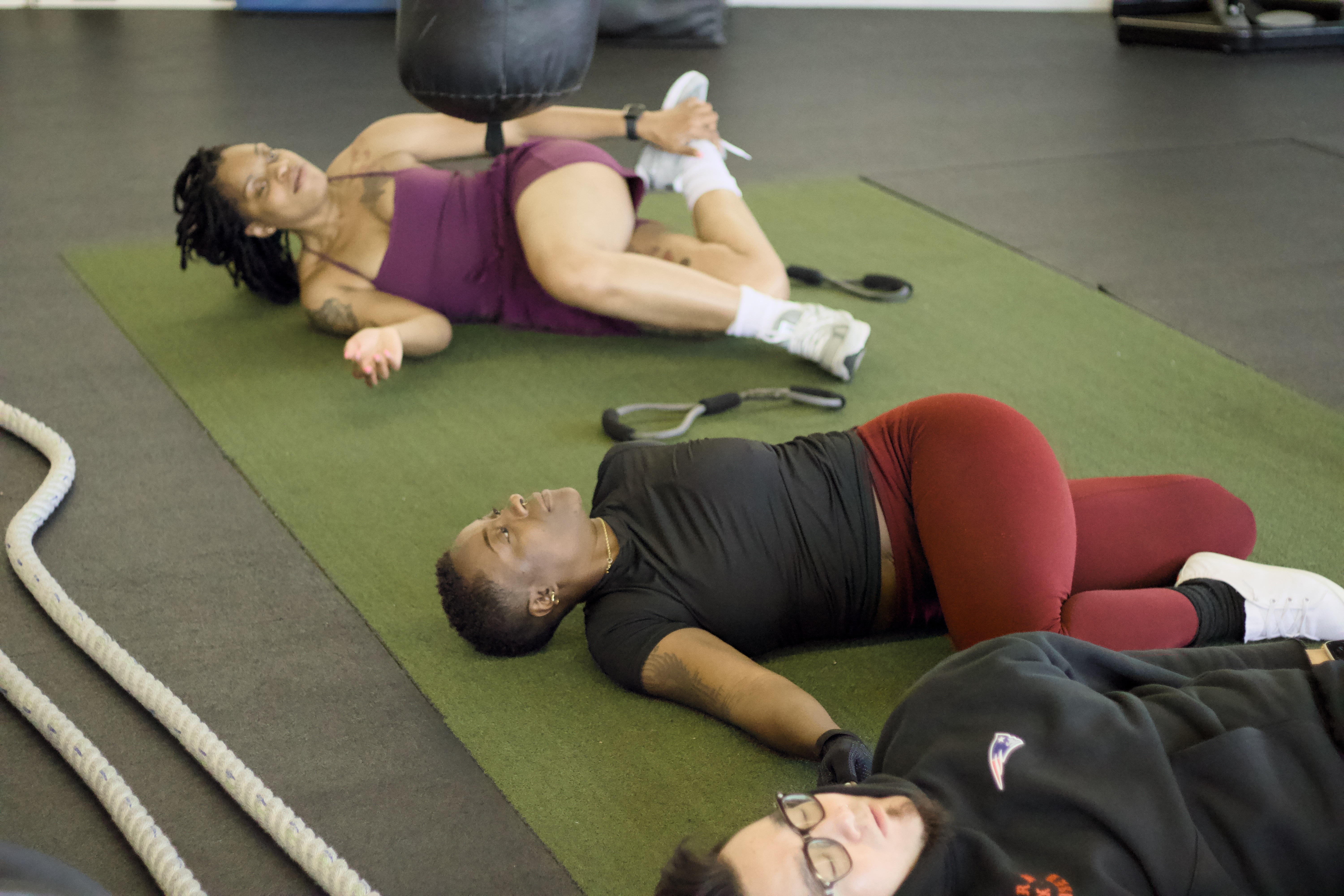
What does it actually look like to be a trauma-informed weight lifting coach or clinician? After certification, how do these principles translate into day-to-day interactions with clients or patients? Let’s paint a picture with a few practical examples, because ultimately the value of this training shines in those one-on-one moments in the gym or clinic:
- Creating a Safe First Session: Imagine you’re a personal trainer meeting a new client who you suspect (or know) has a trauma history. Instead of the typical intake that might focus immediately on fitness goals and measurements, you start by ensuring the client feels comfortable in the space. You might ask gentle, open-ended questions like, “How do you feel about gym environments? Is there anything that would help you feel more at ease while we work together?” (This aligns with one of TIWL’s recommended questions about environmental triggers and safety.) Perhaps the client mentions that loud, sudden noises put them on edge. With your trauma-informed training, you acknowledge this and decide to avoid working right next to the area where barbells are being dropped. You also show them around to familiarize them with the space, pointing out quieter corners and explaining what they can expect during the session – thus eliminating the fear of the unknown. By proactively addressing safety and triggers, you’ve set a foundation of trust. The client sees that you get it and are there not to push or judge them, but to collaborate in creating a positive experience.
- Empowering Through Choice and Agency: During workouts, a trauma-informed approach often means giving the client a sense of control. For example, say you’ve planned a set of overhead presses. Halfway through, you notice your client has become very tense and their breathing is shallow – perhaps the position of having weight overhead is making them uncomfortable (it could be reminiscent of a vulnerable posture). Instead of insisting they finish the set at all costs, you use your trauma-sensitive coaching skills. You pause and check in: “How are you feeling? We can adjust this if something doesn’t feel right.” You might offer a choice: “We can try a different exercise for shoulders, or we can continue but I’ll spot you more closely – which would you prefer?” By centering their agency and choice, you allow the client to feel safe and respected. Maybe they choose a different exercise, or maybe just the act of being given a choice reassures them enough to continue. Either way, you’ve shown that their comfort matters more than sticking rigidly to a plan. Over time, these moments of choice add up to a client rebuilding trust in others and themselves. In trauma recovery, having a voice and making choices are deeply therapeutic, because trauma often involves the loss of control. In a very real sense, every time you let a client call an audible on an exercise or set the pace of progress, you are helping them reclaim a bit of power that trauma took away.
- Trauma-Informed Goal Setting: As a fitness professional, you’re used to goal setting – but now you approach it through a trauma-informed lens. Instead of imposing standard fitness goals (“lose X pounds,” “squat Y kilos by summer”), you ask the client what meaningful goals look like to them. Maybe for a particular client, a goal is “I want to feel strong enough to carry my groceries without pain,” or “I want to come to the gym twice a week because it helps my mood.” You validate whatever they identify and make it the centerpiece of your training plan. If a client is a trauma survivor, you understand that goals might also be non-physical: “I want to not feel anxious in my body” is as valid a goal as any PR (personal record) on a lift. You document these goals and regularly check in, celebrating progress in these areas. In doing so, you steer clear of potentially triggering goal frameworks that focus on appearance or unrealistic standards, and instead honor the client’s personal journey. This flexible, client-centered goal setting fosters intrinsic motivation – the client is working out for their reasons, not to meet an external metric. That sense of ownership can be incredibly motivating and healing.
- Integrating Somatic (Body) Awareness: Suppose you’re a mental health clinician who completed the TIWL certification. In a therapy session, you now feel more confident bringing in a bit of movement or body awareness with your clients. Perhaps you have a client dealing with chronic anxiety after trauma. You might introduce a simple strength-based exercise, like having the client press their palms against the wall or do a few slow squats, as a way to help ground them during a flashback or anxious moment. Because of your training, you know to introduce this gently and with consent: “There’s a technique I learned that sometimes helps people feel more present – it involves a little movement. Would you be open to trying a grounding exercise together?” If they agree, you guide them through it, and then process how it felt. Many clients report feeling more in their bodies and present after such exercises. Over time, you could even involve light weight lifting in therapy – maybe using resistance bands or small dumbbells in session to symbolize carrying strength, or you collaborate with a trauma-informed trainer to incorporate a gym session as part of therapy. The key is, you’re now comfortable blending talk and movement in a way that respects their trauma history. You watch for signs of dissociation or discomfort and use your trauma-informed skills to keep the experience positive and titrated to what the client can handle. By integrating the body into trauma therapy, you might reach clients who haven’t fully responded to talk alone. You’re helping them rebuild a positive relationship with their body, piece by piece.
- Building a Healing-Centered Culture: On a larger scale, practitioners with trauma-informed weight lifting training often become advocates for change in their organizations. For instance, a gym owner who gets certified might start implementing gym-wide changes: staff trainings on trauma sensitivity, creating a quiet corner of the gym as a “calm zone,” putting up posters that reinforce inclusive messaging (“All bodies are welcome here”), or adjusting gym policies to be more flexible (like allowing clients to skip certain activities without penalty). The ripple effect of one person’s training can influence an entire facility’s culture. Weight rooms and fitness classes can transform from potentially intimidating spaces to genuinely healing environments. We’ve heard stories in the TIWL community of clients who once felt alienated in gyms now describing the gym as their “safe space” because of these changes. That is the practical power of trauma-informed weight lifting – it turns strength training into a vehicle for healing and connection, not just physical fitness. As TIWL often emphasizes, a trauma-informed approach must both address the harms present in traditional fitness settings and actively promote the healing potential of movement. In your practice, this might look like regularly soliciting feedback from clients about what makes them feel safe or unsafe, and genuinely integrating that feedback. It might also look like fostering community among your clients – perhaps starting a small group class for trauma-informed weight lifting, where individuals can connect and share experiences of growth. Healing from trauma often happens in a community, and indeed TIWL’s philosophy is that healing relationships and communal support are vital. As a trauma-informed coach or clinician, you hold space for those relationships to form – whether it’s the trust between you and your client, or the camaraderie among a group of clients cheering each other on.
These examples barely scratch the surface, but they illustrate the everyday impact of applying trauma-informed weight lifting principles. It’s in the thoughtful questions you ask, the flexibility you show, and the respect you give to each person’s limits and potential. Over time, these small practices yield big outcomes: clients who not only get stronger physically, but also start to heal emotionally; individuals who reclaim confidence in themselves; and a community that begins to see fitness not as a stressor or a vanity project, but as a pathway to resilience and recovery.
How You Can Move Forward with Trauma-Informed Strength
Becoming a trauma-informed weight lifting professional is a journey – one that involves unlearning some old habits, gaining new insights, and continually practicing empathy and self-awareness. It’s not always easy to change the way we’ve been taught to coach or treat, but as countless practitioners and clients will attest, it is deeply rewarding. By earning a certification in this area, you’re equipping yourself to serve people in a more holistic and humane way. You’re saying yes to an approach that prioritizes humanity over “no pain, no gain,” that values connection over correction. And in doing so, you become part of a growing movement of fitness and healthcare professionals who are redefining what it means to help others get strong and healthy.
If you’re considering taking this step, we encourage you to reflect on your why. Maybe you’ve witnessed a client struggle with feeling unsafe, or you’ve felt that something was missing in the typical coaching toolkit when it came to supporting clients with mental health challenges. Maybe you personally have experienced trauma and understand how profoundly it can affect one’s relationship with their body and with exercise. Trauma-informed weight lifting certification can give you the knowledge, skills, and community to bridge those gaps. It empowers you to turn the weight room into a place of healing, not just a place of sweat.
At TIWL, we often say that weight lifting is more than just picking up heavy objects – it’s about picking up people (metaphorically!) and helping them rise. With trauma-informed training, you’ll learn how to lift in every sense: lifting weights, lifting spirits, and lifting the standards of care in the fitness and wellness industry. We hope this guide has demystified what a trauma-informed weight lifting certification is and inspired you to explore it further. Whether you’re a seasoned coach or a clinician new to the gym scene, there’s a place for you in this work. And most importantly, there are so many individuals out there who can benefit from your commitment to being trauma-informed.
Next Steps: If you’re interested in learning more about Trauma-Informed Weight Lifting and our certification program, we invite you to reach out or explore our resources. Join the conversation, ask questions, and if it feels like a fit, take that leap into the training. We are here to support you every step of the way. Together, let’s continue to build a world where healing and strength go hand in hand, and where no one is left behind on their fitness or recovery journey because of trauma.
For more information on upcoming TIWL certification cohorts, workshops, or to access free educational content, feel free to visit our TIWL website or contact our team. Here’s to fostering a trauma-informed, strength-informed future – one rep at a time.
References: (for further reading and evidence)
- American Council on Exercise – Trauma-Informed Coaching: Definition and benefits of trauma-informed exercise leadership.
- Whitworth et al., 2019 – Journal of Traumatic Stress: Pilot study showing resistance training reduced PTSD and anxiety symptoms and improved sleep quality.
- Donati, C. – Lemon Tree Wellness: Personal account of how weight lifting can empower trauma survivors.
- Trauma-Informed Weight Lifting (TIWL) – Certificate Program Details: List of professionals served and learning objectives.
- Trauma-Informed Weight Lifting (TIWL) – Essential Principles: Commitment to anti-oppression and addressing harm in fitness spaces.
- Khoudari, L., 2021 – Medium Article: Advocacy for strength training as a form of trauma healing beyond yoga.