Healing Trauma Through Weight Lifting - The New York Post
Jul 31, 2026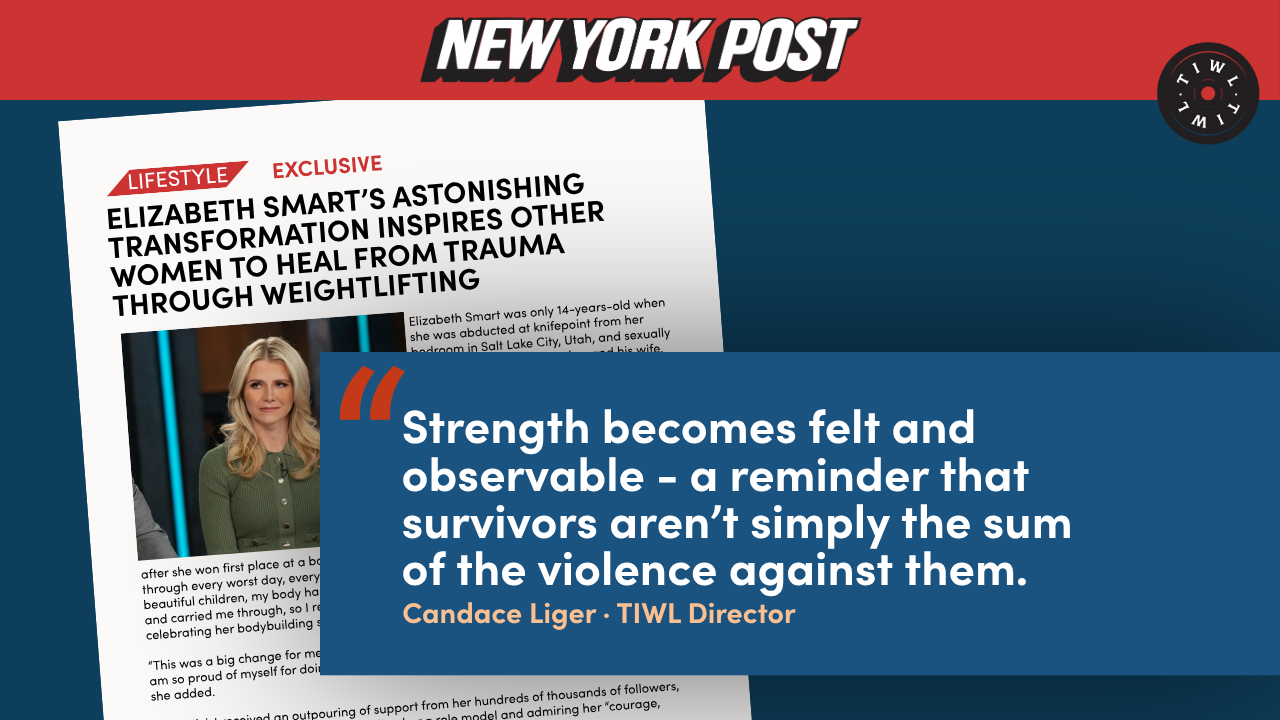
This week, The New York Post published a feature on the healing potential of weightlifting for trauma survivors — and it gave real space to the research and practice behind Trauma Informed Weight Lifting.
The piece was built around Elizabeth Smart's recent bodybuilding win and the attention she's brought to weightlifting as part of her own healing. Her willingness to speak publicly about something so personal matters, and we're glad it opened the door for a wider conversation about what strength training can actually do for survivors. That conversation is where our own work came in.
What Candace Said
TIWL Director Candace Liger spoke with The Post about why muscle can become something more than muscle for survivors:
"Witnessing the body become stronger through consistent training can reshape deeply held beliefs about helplessness."
She also spoke to something that sits underneath everything TIWL teaches — that healing from trauma isn't only a cognitive process:
"For many, safety and agency have to be felt or even expressed in the body first, before the words can actually form."
This is the idea our entire Certificate Program is built around: trauma lives in the body, and a trauma-informed lifting practice gives people a structured, choice-driven way to work with that directly — not around it.
What Taylor Said
The piece also featured Taylor Ann Pappas, a TIWL Certificate Somatics Leader who's been part of our community since she certified in 2023. Taylor spoke about her own history with trauma and how lifting changed her relationship to her body — including a detail that stuck with us:
"There's something really symbolic about choosing to lift a weight and then put it back down. It begs the question of, 'well, what else are you holding on to?'"
Taylor has spent the last few years bringing exactly that insight into her own coaching practice, and more recently into work she's doing directly with TIWL on the fundraising and philanthropy side — grant writing, donor coordination, and sponsorships that keep programs like our scholarship fund and community events running. Reading her story told publicly, in her own words, was a genuinely proud moment for our whole team.
Why This Matters Beyond the Headline
Trauma-informed movement work is still a relatively new field, and pieces like this one matter because they reach people who will never come across a peer-reviewed journal article, but might be exactly the person a gym, a clinic, or a coach needs to reach differently. Every time a mainstream outlet takes this subject seriously, it gets a little easier for the practitioners already doing this work to have it recognized as legitimate — not just to their clients, but to the physicians, therapists, and gyms they collaborate with.
If this is the first time you're hearing about TIWL, here's the short version: we train coaches, clinicians, and movement professionals to bring trauma-informed principles into strength training, grounded in published research rather than trend. If Candace and Taylor's words here resonated, the Certificate Program is where that framework actually gets taught.